
From our Advisor: Long Lost Burial – An Act of Reconciliation
By Lyndon J. Linklater
In June 2024, I was visiting my brother in Winnipeg, and we decided to take a drive a couple hours south to golf and play some casino in Warroad, Minnesota. While we were golfing, my phone started ringing and not recognizing the number, I let it go to voicemail. Later, I had a message from a woman who told me that she had an urgent matter she wanted to tell me about, and that my mother was the one who gave her my number.
As soon as she mentioned my mother, I knew I had to respond (lol).
Eventually, I texted:
“Hi! This is Lyndon J. Linklater. I am in the USA atm, heading to Winnipeg later today, back in Saskatoon Tuesday... texting is the best way to communicate.”
She responded with this message:
“Hi Lyndon. My name is Rachel. I got your number from your mother Maria.
We live on an acreage 20kms east of Saskatoon and we unearthed remains that have been sent to anthropology and have dated precontact. They were found with a freshwater clamshell, which Dr. Walker has said was a traditional internment prior to colonization.
I would like to give these remains the respect they should have as they have been disturbed by excavation.”
After talking more, I understood what needed to be done.
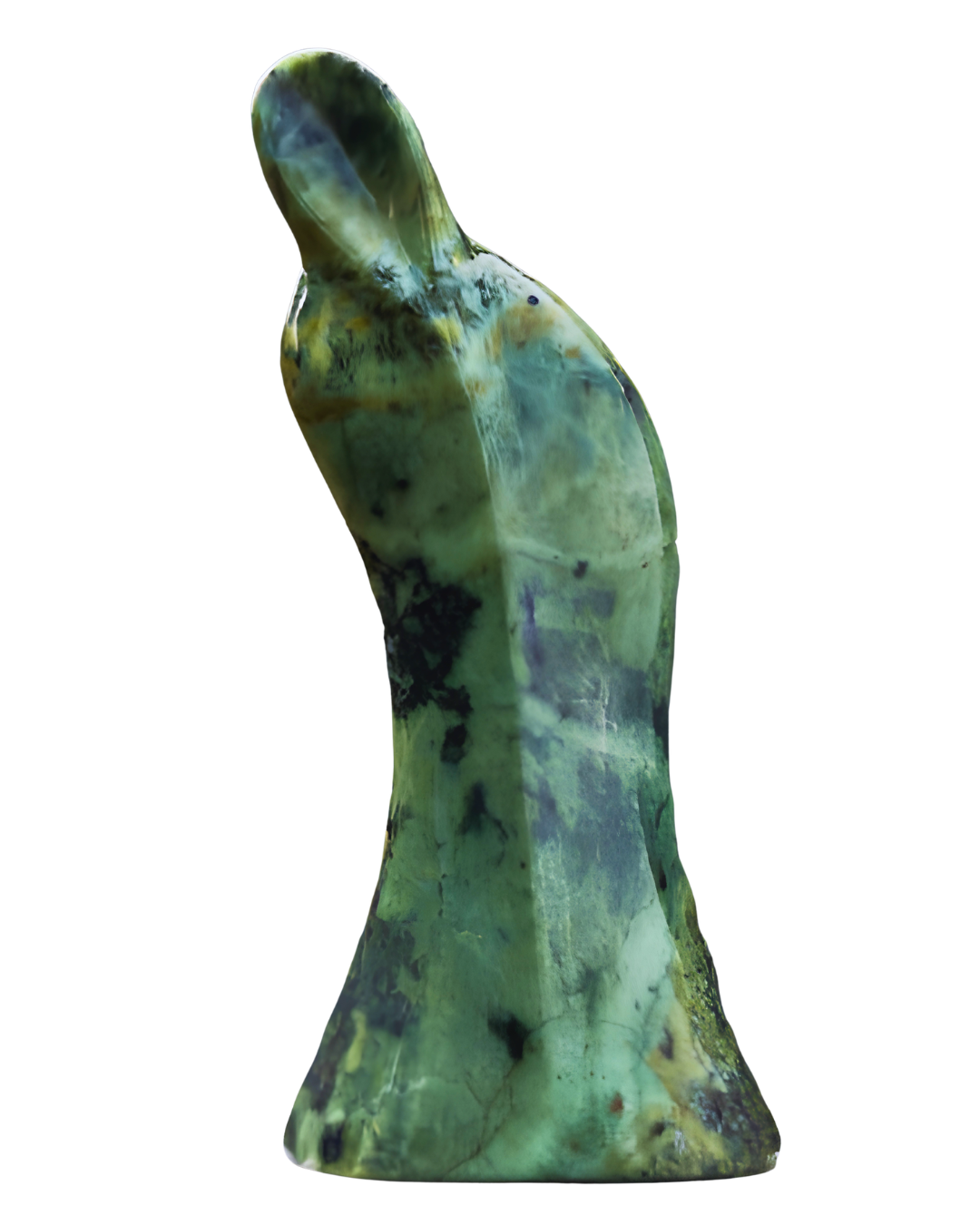
Lyndon Tootoosis, “Spirit Dancer - Protector”, 2019, Brazilian soapstone, 11×5×3”, available at Nouveau Gallery
“In Cree traditions, when a person passes away, their Spirits go on to dance in the sky as the Northern lights. They watch over us and guide us through our dreams. They are there to protect us.”
- Lyndon Tootoosis
As I later learned, this situation occurs on the prairies more often than one would think! In fact, the province of Saskatchewan actually has a cemetery for Indigenous remains. I was told there are many cases where excavation for the purposes of building is the main reason.
Rachel and her family were building a deck that would one day have a fence around it. Rachel’s husband was a builder and had access to machinery and tools, and as part of the build, the ground need an excavator (similar to a backhoe). As the ground began to come up and the dirt began to pile, Rachel noticed what appeared to be bones. She immediately told her husband to stop and they called the RCMP, as well as the Coroner’s Office.
Rachel told me that a forensic scientist by the name of Dr. Ernie Walker was one of the lead investigators on this file. He told Rachel the human remains were that of a woman who would have stood 5 feet 4 inches tall, would have been around 42 years of age. The remains predate the arrival of Christopher Columbus in 1492. There was not enough information to determine cause of death.
Also, initially, she would have been buried about two feet into the ground, but over 500 years later, she was now six feet deep, and as part of the remains unearthed, they found a clam shell. Dr. Walker stated that this was used by the First Nations as part of an internment ceremony.
Ultimately, I went to their acreage and performed a Ceremony.
I asked my helper to smudge where the gravesite would have been, and I sat on the ground and said prayers. As part of my prayer, I said, “please forgive us, we did not mean to disturb your grave site.” I explained, “a Mom, and Dad and three young children live here now, and we have no choice but to move you; we do this in a good way and hope you will understand.”
I had my drum with me and sang two special songs, a funeral song and an honour song. As I sang the second song, my eyes were closed. I don’t know if I was imagining or dreaming, but in my mind, I could see a figure dancing up and down to the beat of the drum. As the figure passed in front of me, I could see that she was wearing a white buckskin leather dress with white high-top moccasins.
As she continued to dance in a circle, I could see she had two braids and she danced up and down to the beat of my drum and as my song ended, on her face, I could see a “Mona Lisa” smile.
I concluded my ceremony, opened my eyes and I stood up. I began to pack up my belongings and as I turned to leave, I saw Rachel sitting on a blanket with her three children. Their ages were about 4, 2 and an infant.
Rachel thanked me for what we did. I couldn’t help but tell her about my experience. I told her about the “Mona Lisa” smile. As I was telling her my story, I noticed tears coming from her eyes.
She said to me, the day we unearthed her, many of her remains were scattered. After Dr. Walker came, Rachel said she felt she needed to do something. She got a wooden box and collected all she could find, bringing them into her house and covering them with a blanket.
That night she had a powerful dream. In her dream, she saw an apparition float from the wooden box and come towards her. She said she did not feel scared. As it came to her, it was as if it had open arms and gave her a welcoming hug…, almost like a thank you hug. She told me what I saw in my mind as I sang made so much sense!
As I left that day, I thought to myself, what beautiful people they are, also, what a beautiful act we did together, an act of reconciliation.
Respectfully,
Lyndon J. Linklater
SaskGalleries Indigenous Advisor